
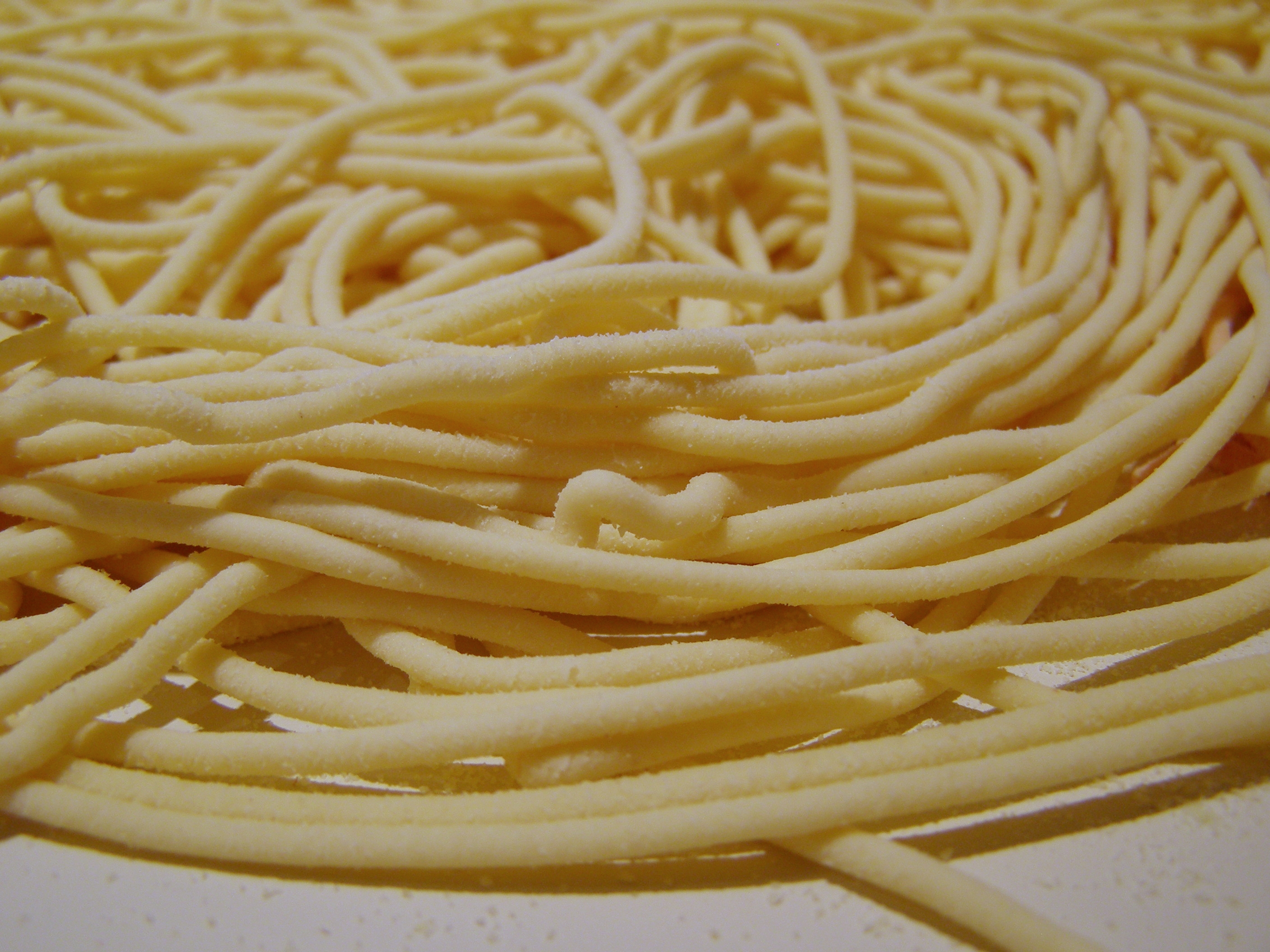
SPAGHETTI is arguably the most popular of all the pastas. Meaning ‘little strings’ was first recorded in the 12th century, in Sicily.
According to Italian law, spaghetti must be made using durum wheat semolina flour. It actually does not stand up well being made with softer wheat flours.
You may be wondering why so many similar pastas have different names. We’ll try to explain.
Basic spaghetti has a particular set of dimensions and you may have noticed that some long dried pasta you find at the store, have a number as well as a name. Basic spaghetti for example, is number 8. This means that it has a particular dimension. In this case, Spaghetti number 8 is 1.7 mm thick.
It helps to know this when creating a pasta dish because the choice of pasta shape and size can make all the difference to the type of sauce served with it. If you have a spaghetti carbonara in any part of Italy, you can guarantee that it will be made using spaghetti number 8. Here are a few more examples.
- Spaghettoni No. 6 – 1.5 mm thick
- Vermicelli No. 10 – 1.9 mm thick
- Vermicellone – 2.1 mm thick
- Cappelino – 1.3 mm thick
The most famous way to serve spaghetti is with a carbonara sauce that originated in the Lazio region. However, spaghetti can be served with any type of sauce.