
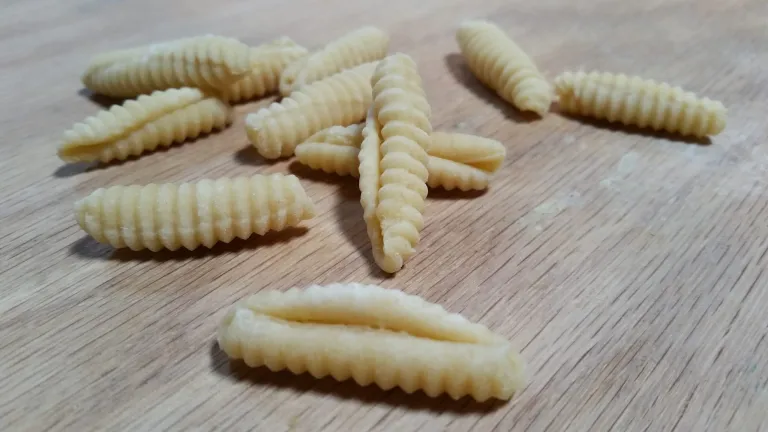
CAVATELLI originated in the southern regions of Italy like Molise and Puglia and are made using semolina flour, water and sometimes a drop of olive oil. They are easily made by hand and many variations of the dough exist. For example, the addition of a good ricotta in the dough totally changes the cavatelli experience.
Cavatelli are formed by rolling the dough into long, finger-thick ropes which are then cut into small equal sized pieces. These pieces are then firmly rolled over a grooved wooden gnocchi board to form ridged (rigati), shell-like pieces or they can be formed on a wooden surface where the result is a smooth (lisci) cavatelli. Hand-cranked pasta machines are available to form cavatelli. These simply attach to your counter and you feed a rope of pasta through two rollers, turn a handle and ridged cavatelli are formed.

Cavatelli is a very popular pasta for Italians to make at home. The most common way to serve it (in our experience), is in a simple broth with chickpeas. However, it is just as happy in any type of cream or tomato sauce you choose to serve it with. Because this is quite a chunky pasta the trick to serving it successfully, is to ensure that every piece of pasta is covered in sauce.